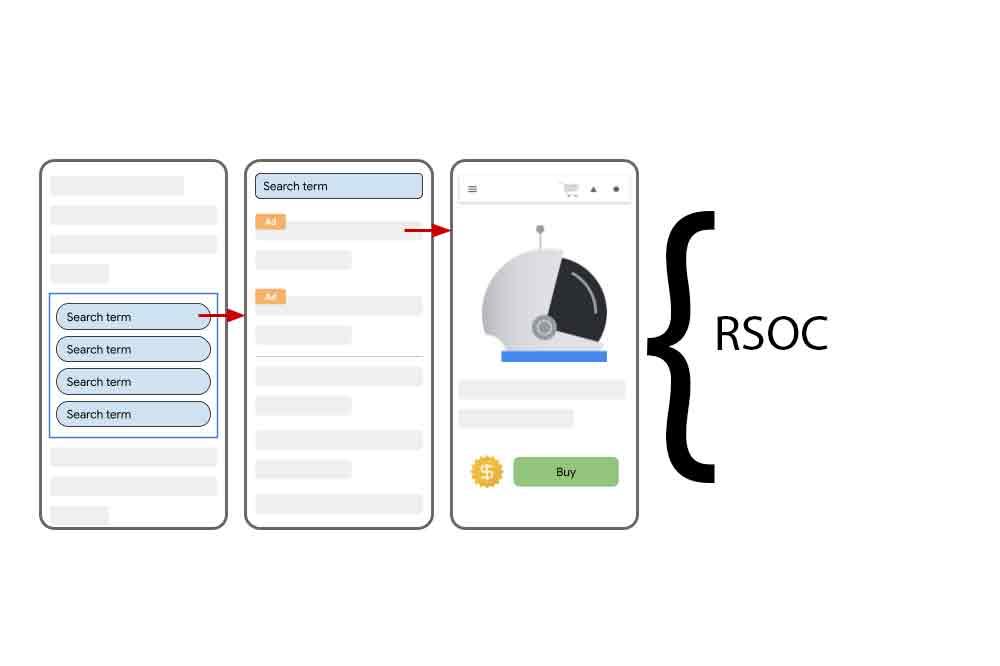
Search engines have evolved far beyond matching exact keywords. Today, relevance is driven by context, meaning, and relationships between topics. This is where RSOC (Related Search on Content) becomes essential.
RSOC (Related Search on Content) refers to the practice of identifying and incorporating related searches, concepts, and semantically connected queries within content to improve relevance, rankings, and user satisfaction. Instead of focusing on a single keyword, RSOC ensures content aligns with how users actually search and how search engines interpret meaning.
In the first 10% of this article, it’s important to emphasize that RSOC (Related Search on Content) is not a tool—it’s a strategic SEO approach that enhances topical authority and semantic depth.
RSOC means expanding your content to naturally include related questions, phrases, and ideas that users commonly search for alongside your main topic. These related searches help search engines understand what your content is really about.
For example, if your topic is digital marketing, RSOC may include content about SEO, PPC, content marketing, analytics, and conversion optimization—without keyword stuffing.
RSOC became important with the rise of semantic search, Google’s Hummingbird update, RankBrain, and BERT. These updates shifted SEO away from keyword repetition toward meaning, context, and intent.
Search engines now analyze relationships between words and concepts. RSOC helps algorithms determine whether your content fully answers a user’s query or only partially covers it.
RSOC aligns content with:
Informational intent
Navigational intent
Commercial intent
Transactional intent
Covering related searches ensures users don’t need to return to Google for additional answers—an important quality signal.
When search engines crawl a page, they evaluate:
Main topic
Supporting subtopics
Keyword relationships
Internal and external links
RSOC strengthens these signals by expanding contextual coverage.
Search engines expect certain terms to appear together naturally. If your content lacks them, it may seem incomplete or shallow.
Natural Language Processing (NLP) allows Google to interpret meaning rather than just words.
Entities (people, places, concepts) are critical. RSOC ensures your content mentions relevant entities connected to the main topic, increasing trust and authority.
Traditional SEO focused on:
One keyword per page
Exact match density
RSOC focuses on:
Topic clusters
Semantic relevance
Search intent coverage
Algorithms change, but intent doesn’t. RSOC adapts naturally to voice search, AI-driven results, and evolving SERP features.
Content optimized with RSOC often:
Ranks for hundreds of long-tail queries
Appears in “People Also Ask”
Gains featured snippet opportunities
RSOC-based content:
Reduces bounce rate
Increases dwell time
Builds topical authority
Use:
“People Also Ask”
“Related Searches”
Autocomplete suggestions
These are direct indicators of RSOC opportunities.
Tools like Ahrefs, SEMrush, and Surfer SEO help identify missing related topics. You can also explore Google’s own documentation on search fundamentals at
👉 https://developers.google.com/search/docs/fundamentals/seo-starter-guide
Best practices:
Add related subheadings naturally
Answer secondary questions clearly
Use internal links between related topics
Avoid forced keyword placement
Overstuffing related keywords unnaturally
Covering unrelated topics just for traffic
Ignoring user intent
Creating shallow content without depth
RSOC works best when relevance comes first.
No. RSOC is broader and includes intent, entities, and semantic relationships—not just keyword variations.
No. It enhances keyword research by expanding topical relevance.
Yes. Covering related questions improves snippet eligibility.
No. It works for landing pages, product pages, and pillar content.
Enough to fully answer the topic—quality matters more than quantity.
Absolutely. Voice search relies heavily on semantic understanding and intent.
RSOC (Related Search on Content) is a modern SEO approach that aligns content with how users search and how search engines think. By focusing on related searches, semantic meaning, and intent, RSOC helps content rank higher, engage users longer, and remain future-proof.
In today’s SEO landscape, success isn’t about ranking for one keyword—it’s about owning the entire topic. RSOC makes that possible.